Before you commit
The details worth discussing.
Capacity and output are different
Battery capacity, measured in kWh, describes stored energy. Output power, measured in kW, affects what can run at the same time. Ask the provider to show both usable capacity and supported loads, including equipment that needs extra starting power.
Backup must be designed explicitly
Do not assume an ordinary grid-connected solar installation will work during a power cut. Ask for a written backup scope covering selected circuits, changeover behaviour, operating limits and whether solar charging remains available when the grid is unavailable.
Choose a suitable installation location
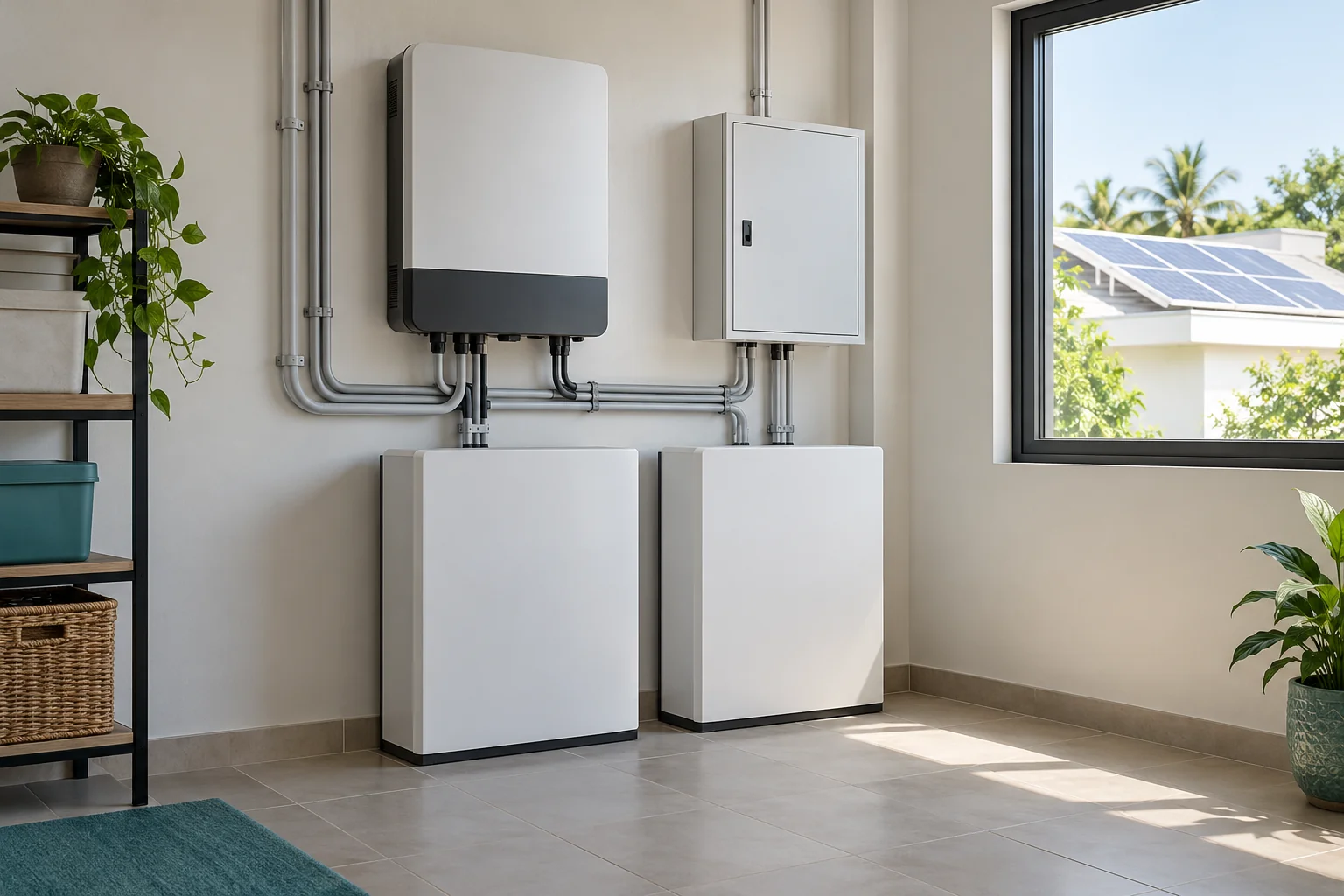
Have the installer assess heat, moisture, ventilation, access and the manufacturer’s location requirements. For larger systems, request an explanation of thermal and fire protection, emergency access and operating procedures. Battery enclosures should only be serviced by appropriately qualified personnel.
Compare the whole ownership cost
Review installation, control equipment, maintenance, replacement assumptions and warranty conditions together. If a proposal promises savings, ask how tariffs, battery ageing and energy losses were handled. Keep backup value separate from any projected reduction in the electricity bill.